Hi Sangha and Friends,
Hi there,
If you should come across this blog in search of the Red Maple Sangha or Buddha-dharma in Renfrew County, please jump to our brand new site and blog.
https://redmaplesangha.wordpress.com/
We are now practicing in Pembroke. Check our schedule out.
Also note:
The former Tendai Canada and RMS websites are no longer active.
in the Dharma,
Innen, doshu
and
Jiho, doshu-in-training

Wednesday, December 05, 2018


Wednesday, March 14, 2018
MARCH ANNOUNCEMENTS
Hi Sangha and Friends,
Our next practice is scheduled for this weekend in Renfrew. We will discuss the final of our 8 Precepts.
The text of the February dharma talk, Precept 7 - Difficult Emotions - is now available as a text document https://www.dropbox.com/s/75c1z6fxwc41des/DHARMA%20TALK%20FEB%20%202018.pdf?dl=0
and a podcast. here
in the Dharma,
Innen, doshu and
Jiho, doshu-in-training
Our next practice is scheduled for this weekend in Renfrew. We will discuss the final of our 8 Precepts.
The text of the February dharma talk, Precept 7 - Difficult Emotions - is now available as a text document https://www.dropbox.com/s/75c1z6fxwc41des/DHARMA%20TALK%20FEB%20%202018.pdf?dl=0
and a podcast. here
in the Dharma,
Innen, doshu and
Jiho, doshu-in-training
Sunday, February 11, 2018
NEWS AND FEBRUARY EVENTS AT RMTS
Hi Sangha and Friends,
and don't forget to reserve your place for our new slideshow...

.... in the Dharma, Innen, doshu
- We are very pleased to announce that we have a new practice site in Pembroke. Finding and securing this space proved to be a bigger challenge than we imagined, after so many simple years at the Marguerite Centre (no longer available). We will be establishing a second monthly practice session on the 1st Saturday of the month, beginning Saturday, March 3, 9.00 am-10.30am.Our new location is at the Pembroke Heritage Manor, at 1111 Pembroke St W. Which is just East of Valu Village.
- We recently offered our 2016 text of the Visualization Sutra talks to the broader Tendai community and were pleased to be able to share this with several other sanghas, including the Templo Budista Tendai de Puerto Rico
- Plans are in process for Innen to offer a set of 8-10 introductory talks on Buddhist teaching, Monday evenings at the Heritage Manor location. Dates will likely be mid-March to mid-April with details to come later.
and don't forget to reserve your place for our new slideshow...

.... in the Dharma, Innen, doshu
Saturday, January 20, 2018
A GIFT FOR OUR PRACTICE HALL
Hi Sangha and Friends,
.

We held our Annual Intentions service this morning. The details are posted on the Intentions link above.
We were additionally supported by this new gift from our Dharma-brother, Koshin Bower.This wooden plaque, shown here, beside our altar KwanYin is a meritorious presence.
He writes:
This is an o-fuda. At the completion of my Shido-kegyo (advanced clerical training in Japan) I hand wrote several of these. They are talismans meant to inspire and protect. They are manifestations of Fudo-myo-o (see link below)
We bow in thanks to Koshin and appreciate his support.
for more on Fudo read here: http://www.onmarkproductions.com/html/fudo.html
in the Dharma,
Innen, doshu
Jiho, doshu-in-training

We held our Annual Intentions service this morning. The details are posted on the Intentions link above.
We were additionally supported by this new gift from our Dharma-brother, Koshin Bower.This wooden plaque, shown here, beside our altar KwanYin is a meritorious presence.
He writes:
This is an o-fuda. At the completion of my Shido-kegyo (advanced clerical training in Japan) I hand wrote several of these. They are talismans meant to inspire and protect. They are manifestations of Fudo-myo-o (see link below)
We bow in thanks to Koshin and appreciate his support.
for more on Fudo read here: http://www.onmarkproductions.com/html/fudo.html
in the Dharma,
Innen, doshu
Jiho, doshu-in-training
Thursday, January 04, 2018
HAPPY NEW YEAR 2018

On behalf of myself, Jiho and our families ,
We all have our reasons to celebrate the passing year and we all have our challenges as we move into the New Year. The Buddha-dharma offers us an unparalleled resource to accompany us into the coming year,and may we wish you and your families all the very best .
The great Japanese teacher, Nichiren, writes:
making offerings at the beginning of the New Year is like cherry blossoms blooming from the trees, a lotus unfolding in a pond, sandalwood leaves in the Snow Mountains or the new moon beginning to rise.
We wish you all the best as this new year, like a new moon, rises over your lives, and blossoms like the cherry trees.
May you find joy and wisdom in this coming year,
Innen and Jiho
Red Maple Tendai Sangha
Renfrew, Ontario
January 1, 2018
Sunday, November 26, 2017

Wednesday, November 22, 2017
SEGAKI-E AND O-HIGAN THIS WEEKEND
Hi Sangha and Friends,
....
in the Dharma,
Innen, doshu
We are hosting our o-Higan and Segaki-e event this weekend.
These are wonderful events, full of personal meaning, where we both acknowledge those who have impacted our lives and passed recently and make a symbolic statement about the afterlife, with Segaki-e, the celebration for Hungry Ghosts.
We are mounting the special Segaki-dan, the altar for Ghosts and we will perform the temple circumambulation-chanting ceremony.
If you would like to participate, contact us,
Innen, doshu
We are hosting our o-Higan and Segaki-e event this weekend.
These are wonderful events, full of personal meaning, where we both acknowledge those who have impacted our lives and passed recently and make a symbolic statement about the afterlife, with Segaki-e, the celebration for Hungry Ghosts.
We are mounting the special Segaki-dan, the altar for Ghosts and we will perform the temple circumambulation-chanting ceremony.
If you would like to participate, contact us,
Innen, doshu
Saturday, October 22, 2016
SYMPOSIUM IN SAN DIEGO
Hi Sangha and Friends,
I will be presenting a poster entitled Two Feet, Deep: Theory and Forms of Contemplative Walking at this year's International Symposium for Consciousness Studies.
https://www.mindandlife.org/international-symposium-contemplative-studies/
This is a wonderful opportunity and major honour for me and us, who will be one of the few Canadians presenting.
There are many leading speakers presenting. For more details, check the link. He will share his experience, source paper and reflections on his return. I expect video and text will be available over the next few months.
in the Dharma,
Innen, doshu
I will be presenting a poster entitled Two Feet, Deep: Theory and Forms of Contemplative Walking at this year's International Symposium for Consciousness Studies.
https://www.mindandlife.org/international-symposium-contemplative-studies/
This is a wonderful opportunity and major honour for me and us, who will be one of the few Canadians presenting.
There are many leading speakers presenting. For more details, check the link. He will share his experience, source paper and reflections on his return. I expect video and text will be available over the next few months.
in the Dharma,
Innen, doshu
Saturday, July 09, 2016
WALKING EVENT
Hi Sangha and Friends,
Check the Shedule page for other changes.
.... in the Dharma,
Innen, doshu
SPECIAL
WALKING EVENT
- On Saturday July 16 we will switch our schedule to allow sangha members to join Judy as she does the ALS fun run at the Mateway Activity Centre in Renfrew to raise funds for ALS!
- There are 3km and 5km runs for $15. Registration: 8:30AM Start Time: 9:00AM
- Judy will be running ; Innen and the RMS “fast-puppy”, Josh, will pole-walk the 3 k circuit
- FYI – a 3 km walk takes about 45 minutes at a brisk pace.
Check the Shedule page for other changes.
.... in the Dharma,
Innen, doshu
Tuesday, June 21, 2016
Saturday, March 26, 2016
CHURCH AND STATE
My
current readings have been a mix of deepening my knowledge of the
history of South Eastern Europe, especially Portugal, and a biography
of Honen, the Tendai priest who launched the Pure Land School
(Jodo-shu) in Japan. Coincidentally, they overlap in time. Honen
lived between 1133 and 1212 CE, and the period I am at in my study is
the transition from Moorish dominance to the early formation of the
state called 'Portu-Cale' which occurred in the late 1100's as well.
What
I found curiously coincidental was that both the mainstream Buddhists
in Japan (primarily Tendai) and the King, as head of Catholicism in
the new Portuguese state sought the same validation. In Japan, the
hierarchy on Mt. Hiei, had enjoyed primacy in the emperor's court for
centuries. They had established a kind of agreement whereby they were
left alone to preach salvation as long as they did not interfere in
state matters. In Europe, the new Portuguese king sought similar
approval for his realm through the Pope in Rome.
In
Japan, the monks of Mt. Hiei stuck by this agreement and, when Honen
started to win over more and more converts to his practice style, a
style which effectively undercut monastic monopoly of faith, they
arranged for Honen to be exiled. The Portuguese king needed to link
his feudal tax system to a regular donation scheme to Rome, thus
securing approval and support for his kingdom, which existed in a
region of a dozen or more other small-scale kingdoms.
Its
interesting how religious movements have to negotiate this
church-state boundary. Contrastingly, many Islamic states and Tibet
solved the issue by assigning state power to the clergy. As we well
know this can be a mixed solution too. It gives us the Dalai Lama but
also the ayatollahs of Iran and figures like those scheming priests
in 16th century Europe.
Yours
in the Dharma,
Innen,
doshu
om
namo amida butsu
Saturday, March 19, 2016
TOWARD A CONTEMPORARY UNDERSTANDING OF PURE LAND BUDDHISM
NEW
BOOK: Toward A Contemporary Understanding of Pure Land Buddhism
Sometimes
a new book can be an introduction to the landscape, a summary of
familiar material, a personal scan on a topic or some other “good
reads”. And then there are books like this. Toward A
Contemporary Understanding of Pure Land Buddhism is
subtitled Creating a Shin
Buddhist Theology in a Religiously Plural World,
and is edited by Dennis Hirota, a Professor of Asian Studies at
Chikushi Jogakuen University in Japan. He is a brilliant writer on
Pure Land in his own right, a world authority on Shinran.
This
book is a very engaging format in that it presents a set of three
“contemporary interpretations” of Pure Land, by Hirota and two
other equally erudite Pure Land academics. Then follows a set of
commentaries by two giants of contemporary western religious thought,
George Kaufman, (God-Mystery-Diversity:
Christian Theology in a Pluralistic World )
and John B Cobb Jr. ( Beyond
Dialogue: Toward a Mutual Transformation of Christianity and
Buddhism) The book
concludes with a response to those two by the three opening writers.
The
initial three chapters offer three separate approaches to the Pure
Land path, which the authors call the hermeneutical, the process and
the buddhological. The first is a familiar approach which centres on
a coherent understanding of oneself and one's place in the world. The
second, Process Theology, is relatively new and comes from recent
Christian thought, notably the writings of people like John Cobb Jr.
The final piece introduces what it calls a “buddhological”
approach, that is using the language and concepts of esoteric
Buddhist writing to explain Pure Land practice, especially mandala
visualization. What follows are the back and forth commentary of the
five writers.
There
is insufficient space here for any kind of expanded remarks on this
book. After my first read-through, I have to confess there is so much
to consider and examine that I probably have little to say at this
point. I found this title most provocative with its underlying theme
of how we are to express Pure Land practice in addressing
contemporary concerns. All note that Pure Land has succeeded in
providing a potent and profound theory and practice which explains
the universe and our means to salvation. It has not similarly
provided guidance for everyday life. It would seem that this was not
a concern for teachers like Shinran.
This
book is far from an introduction to Pure Land. Those new to it are
better of with Suzuki's Buddha
of Infinite Lightor
Unno's River of Fire,
River of Water. This
book will take us far beyond those opening doors.
Yours
in the Dharma,
Innen,
doshu
om
namo amida butsu
Thursday, March 10, 2016
TRAVELS WITH BASHO
Hi Sangha and Friends,
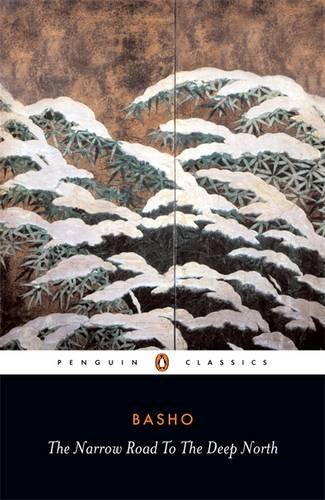 I
had read through his poems and travelogues several times before, but
this time I decided to follow them with maps and pictures. I kept my
tablet open as I read and whenever he mentions where he is, I tracked
it on the map and photo software. Of course the landscape is
radically different from his experience. Now there are skyscrapers,
power lines and paved multi-lane freeways all across the landscape.
Nevertheless, many of the natural sites and temples have changed
little, so I can view something of what inspired his poems.
I
had read through his poems and travelogues several times before, but
this time I decided to follow them with maps and pictures. I kept my
tablet open as I read and whenever he mentions where he is, I tracked
it on the map and photo software. Of course the landscape is
radically different from his experience. Now there are skyscrapers,
power lines and paved multi-lane freeways all across the landscape.
Nevertheless, many of the natural sites and temples have changed
little, so I can view something of what inspired his poems.
You
can read most of Basho's greatest works here:
http://www.poemhunter.com/matsuo-basho/
I
pulled my copy of the collected poetry and writing of Matsuo Basho
off the bookshelf recently and started to re-read it. This time I
approached it a new way.
Basho
is probably the greatest poet of the Japanese haiku style,
which is characterized by a delightful and ironic styles compacted
into just over a dozen syllables in a three stanza structure. Some
call him the Japanese Thoreau because, in addition to being the
acknowledged master of this poetic form, he exemplified a peripatetic
lifestyle that forms the backdrop of his life and work. His poetry
emerges from the travels he takes back and forth across the Japanese
landscape in the middle of the 1600's. Alone, accompanied by younger
poets, on foot or on horseback, he visits shrines, old friends and
sites of rare natural beauty.
I
had read through his poems and travelogues several times before, but
this time I decided to follow them with maps and pictures. I kept my
tablet open as I read and whenever he mentions where he is, I tracked
it on the map and photo software. Of course the landscape is
radically different from his experience. Now there are skyscrapers,
power lines and paved multi-lane freeways all across the landscape.
Nevertheless, many of the natural sites and temples have changed
little, so I can view something of what inspired his poems.
Basho
may have been a Buddhist priest or at least presented himself as one,
and his style has deeply influenced the aesthetic and subject matter
of later Zen poetry.
Yours
in the Dharma,
Innen,
doshu
om
namo amida butsu
Thursday, March 03, 2016
CHANGE AND CONTROL PART 2
Hi Sangha and Friends,
Here is a follow-up conversation
Here is a follow-up conversation
DIALOGUE
ON CHANGE AND CONTROL, PART 2
From
the Dharma perspective the quality of feelings are indicators of
state of mind and images of right/wrong and burden/relief point to
what is happening in your mind. Such mental activity points us to the
fundamental orientation we have to our lives.
In
his first-ever talk, the Buddha said “I come to teach the truth of
suffering and its relief”, so, if you feel some relief, then the
presentation of Dharma has resonated with something in you. In
essence, what the Buddha taught was we are not (spoiler alert!) the
centre of the universe. OMG! What he proposed is that we are located
in an incomprehensible network of cause-and-effect relationships (for
future reading, this is called pratitya samutpada, or
conditioned arising). Our Awakening is to understand that location,
to understand its momentum or purpose and to direct our lives to it.
The amount of control you can experience is determined by how you
understand who this “I” to be.
Q.
.. I've been in a canoe on rapid waters and I appreciate the
challenge of it.
A.
It seems to me that the only place we have much choice or control is
how we lean towards or away from wholesome thoughts, intentions and
actions. The lure and appeal of self-desires is potent, so, yes, it
takes effort and determination.
Q.
However, it also makes me sort of disheartened to think that I can't
have an effective role in changing things I wish to see differently,
particularly the suffering of others. But is that not a major
intention - relief of suffering?
A.
Quite the contrary, you have a decisive part to play in the relief of
dukkha. You are not a passive receptor, nor are you just a cog in a
wheel. The understanding of our true nature as children of the Buddha
is also our awareness that we can express every breath and action for
the relief of suffering beings. Once we start to see that
responsibility and accept that, then we easily trim off all the
wasted effort we make to protect the ego, to hide from truth, pain
and maturity and to delude ourselves that we can live forever in
lives of self-indulgence. Instead of clinging and grasping, life
activities become rich with purpose and focus. What changes is the
knowledge that the context of our every breath is the boundary-less
expanse of the Buddha's loving kindness and compassion. We come to
find the canoe is capsized and we swim in an ocean of compassion.
Q.
And if we are unwholesome, do we not experience dukkha? So in that
way do we not have some form of control?
A.
Yes, unwholesome action (and thought and intention) are causes of
dukkha. Always remember dukkha is not something limited to personal
experience. The Buddha's first teaching was “sarvam dukkham” -
meaning all this is incapable of providing satisfaction. He
points to our identification of who we are as being located in the
endless cycle of birth and death (that cycle of conditioned arising
mentioned above) as the the reason we feel empty or lacking. Dukkha
is not ours, it is the flavour of human experience.
This
question of choice and control is not entirely clear to me. I know it
is different from the current Western obsession with
choice/control/autonomy/self. What I understand so far, and from my
limited perspective of what is known as Pure Land teaching, is that
choice is a perception of the presence of the liberative impulse of
the Buddhas. There is no 'me' and even to the extent that there seems
to be, that 'me' relies on the power of the Buddhas to direct 'me' to
awareness.
Q.
At the same time, though, there seems to be a certain level of
"letting go" that must need to happen in order to focus our
intentions on our movement with the momentum as opposed to working
towards change.
A.
The momentum is always about change anyway. The second teaching of
the Buddha is anicca, impermanence.
The critical detail is that it is not someone making change happen.
Change is the form of reality. It is directed at openness, compassion
and thorough self-awareness. What we can do is align ourselves with
that momentum of change (i.e. wholesome activity) or struggle to
maintain our deluded sense of individual autonomy (i.e. un-wholesome
activity, that which generates more dukkha). The letting go is not
abandoning a commitment to change, but of realizing that we are not
isolated, individually-willed selves but are part of the
compassionate activity of the Buddhas.
Yours
in the Dharma,
Innen,
doshu
om
namo amida butsu
Sunday, February 28, 2016
CHANGE
Hi Sangha and Friends,
Here is an exchange I had with a friend recently.
Q: When you say we are never the agents of change - do you mean ever?
A: What I propose is spoken from my understanding of Buddha-dharma (the teachings of the Buddhas) and it is not so present in the secular-psych approaches which remain married to the 20th century existentialist philosophy that emphasizes individual identity and personal choice. It is inconsistent with mainstream Christian thought too, which likewise emphasizes individual identity and will. The biggest differences are the doctrine of "karma" (cause and effect) and the initial "3 Stains" Buddhist teaching, which asserts :
What we experience as our "self" is a temporary presentation that is causally linked with the momentum that precedes us. The causes that lead to "me" are not limited to what I have done, but are the results of previous karmic force which may include individuals like my parents and grandparents, but may also include higher level karma, such as social and cultural forces.
I use that image of canoeing on a fast flowing river, but the more accurate Buddhist metaphor, which would scare off most people, is that we are not in a canoe but we are actually the peaks of those moving waves. We cannot change the ocean or the waves. We can only attend to the momentum and align ourselves with it. Our purpose is to recognize our true "wave-ness" and fulfill that as completely as we can. We experience "Dukkha" (existential lack) when we try to set ourselves against or separate ourselves out from the momentum of the wave and the ocean.
The concept of "will" which so dominates Western thought is not much of an issue for Buddhist teaching. Instead we use the term "vedana" which roughly equates to intention. It is the directionality of our thoughts, desires and, ultimately our actions. When our thoughts, intentions and actions are "wholesome (Kusala, that is, directed at realizing our true nature) then we flow with the flow. When they are unwholesome (a-kusala, self-obsessed) then we experience that dissatisfaction that characterizes human life - ie. Dukkha.
The challenge for us is not to cause change but to discover the flow of change and how to best align ourselves with it.We are more collaborators than agents. This remains a moral and positive purpose.If that's the case, why do we reflect, pay attention to our values, set our own intentions and facilitate our own attentive action? When we took your pups for the walk earlier this winter I really heard you when you talked about being aware of the already existing momentum. But do we not act as agents of change on some level?
Only in a relative sense, that is, to the extent that we hold to the idea of a separate self. The value of meditation, value clarification and intention setting is that it permits us to see through the delusion of individual selfhood, at least momentarily, so we can release the self-obsession that drives our lives and suffering. They permit us to step outside of the narrowness of "my" experience, and allows enough perception of our location in the flow that we broaden or value system to encompass all beings. It promotes a larger, non-self-obsessed desire for the Awakening of all beings from their suffering. Meditative practices are one of the eight tools (Buddhist cal the the Eight-fold Path) recommended to us so we can grow beyond the compressed and sorrowful states of individual being.
This has lead to an accusation of determinism, fatalism and nihilism being targeted at Buddha-dharma by those whose understanding is immature. The teachings, practices and ethics of Buddhist teaching are not life-denying or passive. On the contrary, we are called in each moment to discover how we are ever the expression of universal wisdom and compassion. The question raised for us is how will we act to demonstrate or "realize" that.
in the Dharma,
Innen, doshu
Here is an exchange I had with a friend recently.
Q: When you say we are never the agents of change - do you mean ever?
A: What I propose is spoken from my understanding of Buddha-dharma (the teachings of the Buddhas) and it is not so present in the secular-psych approaches which remain married to the 20th century existentialist philosophy that emphasizes individual identity and personal choice. It is inconsistent with mainstream Christian thought too, which likewise emphasizes individual identity and will. The biggest differences are the doctrine of "karma" (cause and effect) and the initial "3 Stains" Buddhist teaching, which asserts :
1. "Anatta"- there is no separate eternal self or soul (yes, there are transient spirit-selves but none that survive death)The second point is the crucial one here for this discussion. It asserts that all there is is a causally interconnected net of continuously shifting and changing phenomena within which we we seem to experience ourselves as unique. In short, everything is already changing all the time. That is its nature. We do not cause the change, nor can we.
2. "Anicca" - there is nothing in the realm of time/space which possesses permanence, - everything is transient and changing, and
3. "Dukkha" - this realm of our normal experience can not provide us full satisfaction or fulfillment
What we experience as our "self" is a temporary presentation that is causally linked with the momentum that precedes us. The causes that lead to "me" are not limited to what I have done, but are the results of previous karmic force which may include individuals like my parents and grandparents, but may also include higher level karma, such as social and cultural forces.
I use that image of canoeing on a fast flowing river, but the more accurate Buddhist metaphor, which would scare off most people, is that we are not in a canoe but we are actually the peaks of those moving waves. We cannot change the ocean or the waves. We can only attend to the momentum and align ourselves with it. Our purpose is to recognize our true "wave-ness" and fulfill that as completely as we can. We experience "Dukkha" (existential lack) when we try to set ourselves against or separate ourselves out from the momentum of the wave and the ocean.
The concept of "will" which so dominates Western thought is not much of an issue for Buddhist teaching. Instead we use the term "vedana" which roughly equates to intention. It is the directionality of our thoughts, desires and, ultimately our actions. When our thoughts, intentions and actions are "wholesome (Kusala, that is, directed at realizing our true nature) then we flow with the flow. When they are unwholesome (a-kusala, self-obsessed) then we experience that dissatisfaction that characterizes human life - ie. Dukkha.
The challenge for us is not to cause change but to discover the flow of change and how to best align ourselves with it.We are more collaborators than agents. This remains a moral and positive purpose.If that's the case, why do we reflect, pay attention to our values, set our own intentions and facilitate our own attentive action? When we took your pups for the walk earlier this winter I really heard you when you talked about being aware of the already existing momentum. But do we not act as agents of change on some level?
Only in a relative sense, that is, to the extent that we hold to the idea of a separate self. The value of meditation, value clarification and intention setting is that it permits us to see through the delusion of individual selfhood, at least momentarily, so we can release the self-obsession that drives our lives and suffering. They permit us to step outside of the narrowness of "my" experience, and allows enough perception of our location in the flow that we broaden or value system to encompass all beings. It promotes a larger, non-self-obsessed desire for the Awakening of all beings from their suffering. Meditative practices are one of the eight tools (Buddhist cal the the Eight-fold Path) recommended to us so we can grow beyond the compressed and sorrowful states of individual being.
This has lead to an accusation of determinism, fatalism and nihilism being targeted at Buddha-dharma by those whose understanding is immature. The teachings, practices and ethics of Buddhist teaching are not life-denying or passive. On the contrary, we are called in each moment to discover how we are ever the expression of universal wisdom and compassion. The question raised for us is how will we act to demonstrate or "realize" that.
in the Dharma,
Innen, doshu
Saturday, February 20, 2016
SECULAR BUDDHISM
We have been emphasizing the jodo or devotional tradition through our study of the Visualization Sutra. (For more on this see this month's Dharma talk) This stresses a personal relationship that can exist between ordinary humans and a trans-human presence, such as Amitabha, Jizo Kwan Yin or many others.
Within the phenomenon of Western Buddhist culture there is a form of Buddhism called secular Buddhism or Buddhist atheism or a number of other things. Prominent proponents of this position are Stephen Batchelor and Rick Harris. The American Stephen Batchelor, author of After Buddhism: Rethinking Dharma for A Secular Age ; Buddhism Without Beliefs and Confessions of A Buddhist Atheist is a controversial figure who explores the ideas that bridge conventional Buddhist teaching and the views of modern atheism. Harris another American mindfulness teacher is author of Secular Meditation: 32 Practices for Cultivating Inner Peace, Compassion, and Joy.
There is an excellent blog which acts as a base-camp for Secular Buddhism. It offers a distinction between traditional and secular Buddhism :
Much of secular Buddhist practice is the same as traditional, but there are some differences, which are noted where appropriate.The bottom line in Buddhism is to eliminate suffering for yourself and others. All the teachings strive to that end. The difference with secular Buddhism is that the focus is on this lifetime, in this world, whereas some traditions believe the practice takes many life times, and their goal is to end the cycle of rebirth.
The Secular Buddhism site features some instruction in this approach. More valuably, it is full of book reviews and great podcasts with significant teachers in modern Dharma. One I especially enjoyed is the podcast interview with David McMahan. His book The Making of Buddhist Modernism is an excellent examination of the causes and conditions which have contributed to the overall landscape of contemporary Buddhism. McMahan is Professor of Religious Studies at Franklin and Marshall College, having earned his Ph.D. at the University of California, Santa Barbara. His research focuses on Buddhism and modernity, South Asian Buddhism, and the effects of globalization. He has published a number of journal articles about these topics, and has presented lectures all over the world, most recently by invitation at Minzu University in Beijing, China. This hour-long interview explores his ideas from the Buddhist Modernism book.
in the Dharma,
Innen, doshu
Within the phenomenon of Western Buddhist culture there is a form of Buddhism called secular Buddhism or Buddhist atheism or a number of other things. Prominent proponents of this position are Stephen Batchelor and Rick Harris. The American Stephen Batchelor, author of After Buddhism: Rethinking Dharma for A Secular Age ; Buddhism Without Beliefs and Confessions of A Buddhist Atheist is a controversial figure who explores the ideas that bridge conventional Buddhist teaching and the views of modern atheism. Harris another American mindfulness teacher is author of Secular Meditation: 32 Practices for Cultivating Inner Peace, Compassion, and Joy.
There is an excellent blog which acts as a base-camp for Secular Buddhism. It offers a distinction between traditional and secular Buddhism :
Much of secular Buddhist practice is the same as traditional, but there are some differences, which are noted where appropriate.The bottom line in Buddhism is to eliminate suffering for yourself and others. All the teachings strive to that end. The difference with secular Buddhism is that the focus is on this lifetime, in this world, whereas some traditions believe the practice takes many life times, and their goal is to end the cycle of rebirth.
The Secular Buddhism site features some instruction in this approach. More valuably, it is full of book reviews and great podcasts with significant teachers in modern Dharma. One I especially enjoyed is the podcast interview with David McMahan. His book The Making of Buddhist Modernism is an excellent examination of the causes and conditions which have contributed to the overall landscape of contemporary Buddhism. McMahan is Professor of Religious Studies at Franklin and Marshall College, having earned his Ph.D. at the University of California, Santa Barbara. His research focuses on Buddhism and modernity, South Asian Buddhism, and the effects of globalization. He has published a number of journal articles about these topics, and has presented lectures all over the world, most recently by invitation at Minzu University in Beijing, China. This hour-long interview explores his ideas from the Buddhist Modernism book.
in the Dharma,
Innen, doshu
Saturday, February 06, 2016
PRECEPTS
This
morning we recited the Eight Lay Precepts, as we do from time to
time. This lead to a vigourous discussion about the repetitive use of
the phrase “I vow..” What are vows? How responsible are we
for them? What happens when we fail?
Precepts
or vows refers to the shila components of Buddhist teaching.
Shila is the third component of the three which also includes wisdom
(prajna) and practice (samadhi). This term can mean morality, ethics
or values. These represent behavioural standards, rather than some
independent moral code, like the Ten Commandments. Traditionally,
monks, priests and nuns take a more elaborated set of precepts, while
laypeople or upasakas have a smaller and simpler set, such as the
Eight referred to above.
There
are forms of Buddhism which treat moral choices as “commandments”
and, similar to Christian teaching ,depicts shila-violation as a
punishable act, with the consequence being any number of terrible
hell-realms. This view treats karma as a code-and-judgment
phenomenon.
I
prefer to view vows as personal statements of intention, motivated by
the desire for Awakening (bodaishin). They are like flight plans we
make, for ourselves and as proclamations before our peers. As with a
pilot, we do not control the whole flight route and we may indeed
fail or be required to alter our plans as circumstances arise. We are
responsible for how we act on these intentions, but are never
accountable for outcomes (because we do not control the wider context
of our actions).
We
make intentions to guide our efforts to serve the Dharma. We
understand , as we make them, that we may fail. We further understand
that vow-taking or intention-setting is a step taken on a path which
leads beyond this immediate lifetime. Our actions have karmic value
which will certainly impact beyond this present life, as well as
impact on lives adjacent to ours in this context.
Finally,
we also understand that the completion of any precept or vow is not
the assignment of any act to ourselves alone. We make vows in
awareness of the karmic momentum from other lives, other people and
events. We recognize this life is interdependent on other lives, so
we accept that we can only effect a small part of the momentum of any
moment. We take a vow knowing our role is partial. Further, we
incorporate in our vows and practice the resonance of our efforts
with those of countless Buddhas and bodhisattvas who have made
concurrent vows to contribute to our lives. The success of any vow is
never ours alone, just as the failure cannot ever be ours alone.
Yours
in the Dharma,
Innen,
doshu
om
namo amida butsu
Saturday, January 09, 2016
JEWEL COLOURS FROM SUTRAS
As we study sutras, like the Visualization Sutra, we run across references to colours and jewels from which they derive. Below is a quick reference guide to assist your study.
If you look at your copy of the Mandala, you will see the predominance of the orange-gold colours, but the presence of the whole range too.
If you look at your copy of the Mandala, you will see the predominance of the orange-gold colours, but the presence of the whole range too.
imagine that the beryl ground shines brilliantly, inside and out, and that this ground
is supported from below by columns that are made of diamond and the seven kinds
of jewels and hung with golden banners. These columns have eight sides and eight
corners, each side being adorned with a hundred kinds of jewels. Each jewel emits
a thousand rays of light, each ray in turn having eighty-four thousand colors.
As they are reflected on the beryl ground, they look like a thousand kotis of suns,
so dazzling that it is impossible to see them in detail.

Lastly, we include beryl, which has a wide variety of natural colour versions.
The green one is what we call emerald


Wednesday, December 30, 2015
SEASONAL READING: HOUSE IN THE SKY

The book which has been occupying my interest over the holidays is a autobiographical piece called A House in the Sky. The author is a Canadian writer, Amanda Lindhout, who was very much in the news a few years ago when she was kidnapped and held for ransom for over a year by some petty bandits in Somalia. The book covers her early life in part, but the majority is a description of her time in captivity.
Her writing style is crisp and straightforward, with comments and imagery that complements the story, without turning it into a literary exercise. The writing is never a distraction from the events which are gripping, terrifying and, at times shocking. One could not say whether she was always as insightful and honest as the character presented in the book. My guess is the experience cultivated this self-awareness far beyond the levels anyone would expect in normal life.
The story is fascinating at a number of levels. For an understanding of the tragic political and social environment of Africa her narrative describes, in detail, the horror and desperation experienced by the people of Somalia, which can easily stand in for most of the other struggling nations of that continent. As a travel book, this is, no doubt, a cautionary tale for those who would set off with romance in their minds and little understanding of the current political situation in their destinations. What moved me very much in the reading has been her spiritual journey. From someone who, like most Western travellers, lacks much of a commitment to any religious tradition, we witness the writer coming to terms with all of the most crucial religious issues in human life. She investigates Islam, partly as a survival strategy, and learns how she can respect much of the mainstream message. She clearly understands the distortions that rule her captors' minds, but this does not deny her an understanding of civilians outside of her prison. She describes a number of incidents that relate somewhat or considerably to practices of both mindfulness and broader meditation. Some of the moments of insight and strength represent familiar experiences for long time meditators. Her description of near death awareness and a profound compassion for her captors situations are among the most moving of the entire book. All in all, a highly recommended read. Apparently, and not surprisingly, there is a film adaptation on the way. There are also several disturbing news video of Lindhout, from that time, on YouTube.
in the Dharma,
Innen
Friday, December 18, 2015
PREPARING FOR PURPOSE
We
recently completed our December reflection which was intended to look
back at the past year and consider the ways in which we have
contributed to our respective purposes. We are now shifting into
looking ahead, looking into the coming year through the lens of our
purposes. I will comment on that each week for the next month or so,
until we arrive at our workshop in late January.
This
process brought me back to a book which I read several years ago and
am finding as valuable now as it was then. The book is called "The
Power of Purpose; Find Meaning, Live Longer, Better" by the
American writer Richard J Leider. I highly recommend this book since
it is written so clearly and contains many personally moving stories
from the authors experience. One section that I would like to
highlight here is what Leider calls purpose myths. He lists lists
four common myths that we believe about purpose and does his best to
dispel them.
Myth
1: to have purpose means I must do something completely original
Reality:
Can you think of anything that is totally new. The paradox of purpose
is that, in order to address new solutions, we must first familiarize
ourselves with the ideas of others to form a base for launching our
own ideas.
Myth
2: only a few special people have true purpose in their lives.
Reality:
This is the most commonly rationalized of all myths. There is no
denying that often we have relied on others to solve many of our
problems however, being a novice is often an asset because we aren't
hemmed in by traditional views. It's the passion to make a difference
that counts most so we must carefully tend our passion
Myth
3: true purpose comes as inspiration or revelation until that time
comes I must I might as well keep plotting ahead
Reality:
this “pop-in” motivation theory would have us believe that new
directions are flashes of brilliance which descends on the lucky few.
Inspiration in fact, comes to those who seek it. First we must begin,
then purpose moments appear.
Myth
4: purpose is
nice but impractical. I need money!
Reality:
Many times we become so caught in day-to-day survival that we lose
sight of what were doing. Our activity becomes a false end in itself
rather than a means to an end. People often say: "how on earth
can you expect me to find the time?" For most of us time is
indeed the biggest barrier. But waiting until we have the time is as
futile as trying to save money by putting away what we don't happen
to spend. The only way to commit time to purpose is to steal it from
some other activity. This is what the power of purpose is all about –
aligning our energies around true priorities
Understanding
how we become trapped in these myths is an important step to
preparing ourselves to build a life designed to fulfill our personal
purpose.
in the Dharma,
Innen, doshu
Subscribe to:
Posts (Atom)